Kyrgyzstan nomad trails, 9 days
Bishkek → Ala Archa National Park → Issyk-Kul → Karakol → Song-Kul
From €985 per personView tour
Mountains and nomad culture
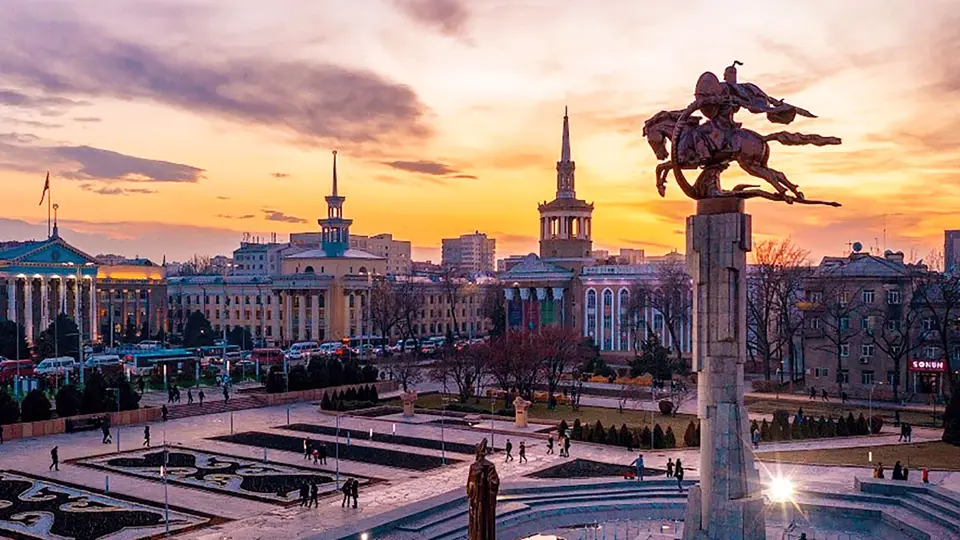
High pastures, yurt camps and the blue water of Issyk-Kul.
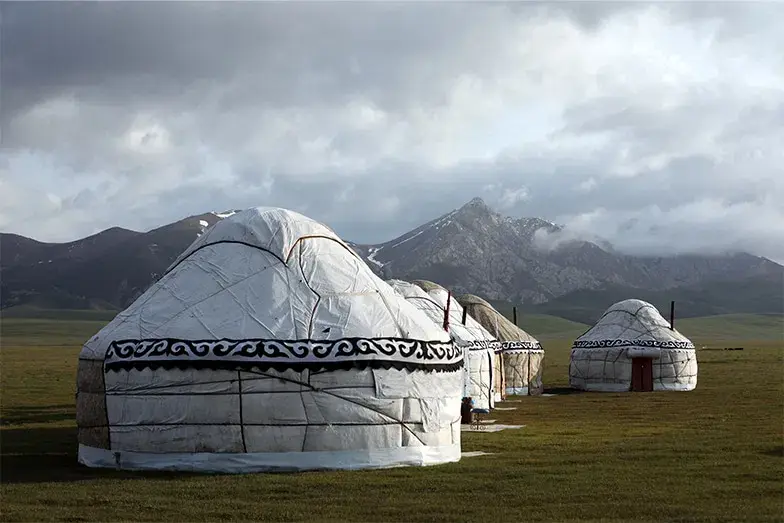
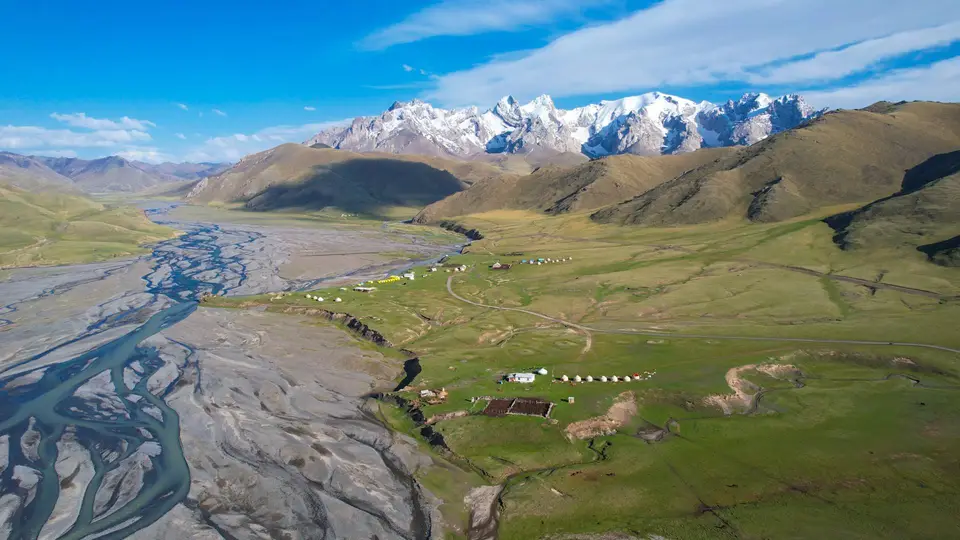
Kyrgyzstan is a mountain country: the Tien Shan and Pamir-Alay ranges cover most of its territory, and in summer families still move their herds and yurts to the high pastures, the jailoo. Staying in a yurt camp at Song-Kul, riding horses across the valleys or hiking above Karakol is the heart of a Kyrgyz journey.
Issyk-Kul, one of the largest mountain lakes in the world, stretches for nearly 180 km below snow peaks. Kyrgyzstan pairs naturally with Kazakhstan (Bishkek is a few hours from Almaty) and with Uzbekistan through the Fergana Valley, and Osh is the northern end of Tajikistan's Pamir Highway.
Summer yurt camps on the jailoo, horse games, felt-making and eagle hunters.
From easy valley walks to multi-day treks around Karakol and Jyrgalan.
A vast lake that never freezes, and a high alpine lake at about 3,000 m.
Visa-free stays of up to 60 days for many nationalities.
Top destinations
Tours
Bishkek → Ala Archa National Park → Issyk-Kul → Karakol → Song-Kul
Ashgabat → Darvaza gas crater → Kunya-Urgench → Khiva → Bukhara → Samarkand → Seven Lakes (Haft Kul) → Tashkent → Margilan → Osh → Bishkek → Song-Kul → Issyk-Kul → Almaty
Dushanbe → The Pamirs → Wakhan Valley → Pamir Highway → Osh
Tashkent → Khiva → Bukhara → Samarkand → Bishkek → Issyk-Kul → Karakol → Song-Kul
Season
Best months: June–September.
Ideal Good Challenging
Kyrgyz identity is tied to the horse, the yurt and the epic of Manas, one of the longest oral poems in the world. Hospitality is generous: guests are seated at a dastarkhan spread with bread, jam, sweets and tea. Traditional crafts include shyrdak felt carpets and the kalpak, the white felt hat still worn by many men.
The valleys of Kyrgyzstan lay on the northern branch of the Silk Road: the Burana Tower near Tokmok marks the site of the medieval city of Balasagun. The Kyrgyz were nomads for most of their history, under a series of khanates, before becoming part of the Russian Empire in the 19th century and then the USSR. Kyrgyzstan became independent in 1991.
Around 90% of the country is mountainous, and much of it lies above 1,500 m. The Tien Shan runs across the centre and east; Ala Archa National Park is less than an hour from Bishkek. Rivers, glaciers and alpine lakes such as Song-Kul and Ala-Kul make it a paradise for walkers and riders.
Food
Boiled meat and noodles, served at every celebration.
Fried meat with onions and potatoes, often cooked in a cauldron at camp.
Karakol's cold, spicy noodle soup with jelly, from the Dungan kitchen.
Fried dough pieces, always on the table with tea.
Fermented mare's milk, drunk on the summer pastures.
Citizens of many countries, including the UK, the EU and the USA, can visit Kyrgyzstan visa-free for up to 60 days. Check official sources before you travel. Border-zone permits are needed for some areas near China (for example parts of the Inylchek glacier). They take time to issue, so mention them early when planning.
Most travel is by private vehicle or 4×4: roads to Song-Kul, Tash Rabat and the high valleys are unpaved in places. Bishkek to Karakol is a full day around Issyk-Kul. Domestic flights link Bishkek and Osh.
Travel guide
Yurt camps at Song-Kul generally operate from mid-June to mid-September, depending on snow and weather.
No. There are easy day walks and horse rides as well as demanding multi-day treks. Tell us your level and we plan accordingly.
Yes. The usual crossing is through the Fergana Valley via Osh, or by flying between Tashkent and Bishkek.
Answer a few questions and a planner in Khiva will send a day-by-day route and a price. Free, with no obligation.
Darvaza Trip · Koshona street 75/1, Khiva, Uzbekistan · WhatsApp +998 91 920 94 20 · tours.uzbekistan@gmail.com · darvazatrip.com/destinations/kyrgyzstan/