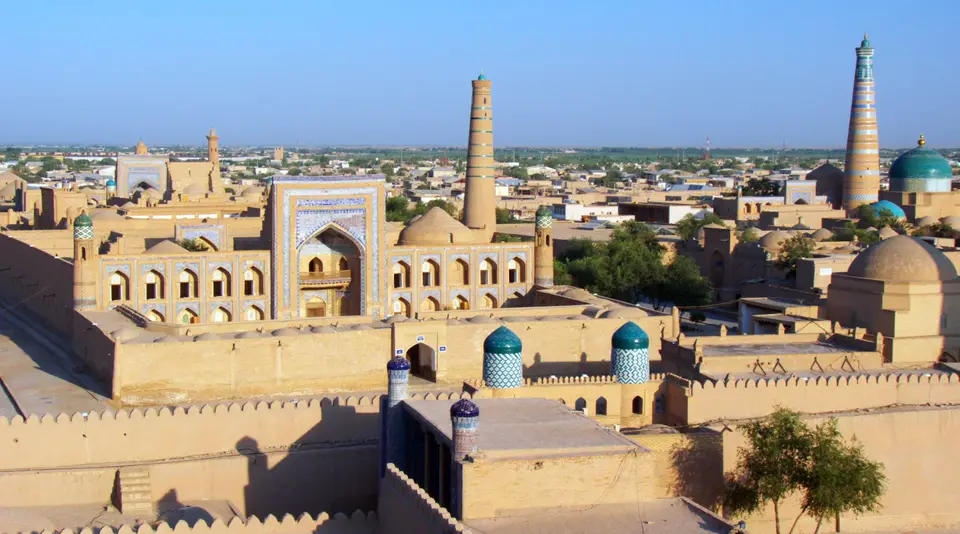
The Silk Road heartland
Uzbekistan travel guide
Blue domes, walled cities and the desert between them.
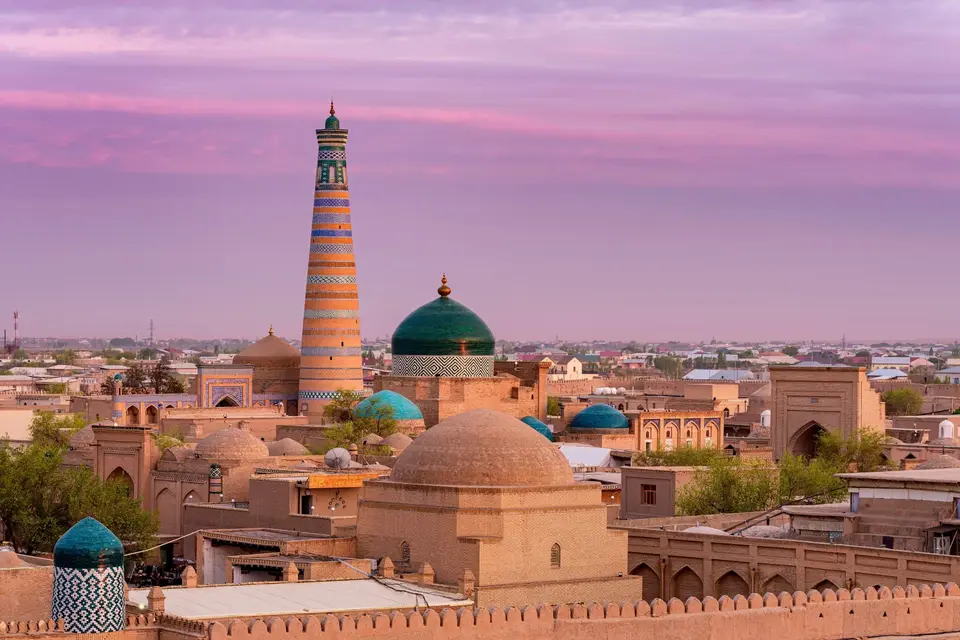
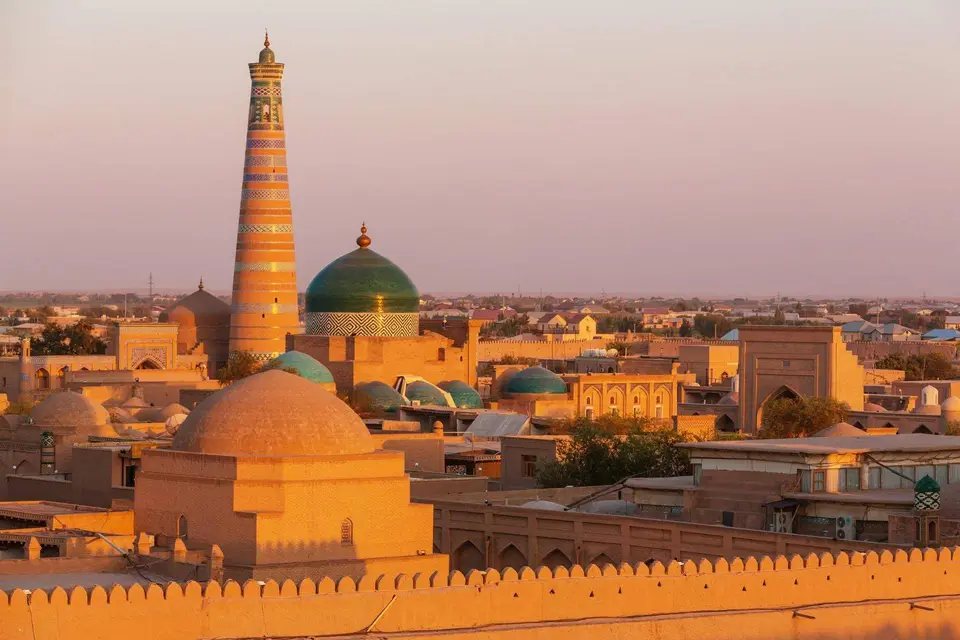
Uzbekistan holds the greatest concentration of Silk Road architecture anywhere: Samarkand, Bukhara and Khiva are three of the most complete historic cities in Asia, and all three are UNESCO World Heritage Sites.
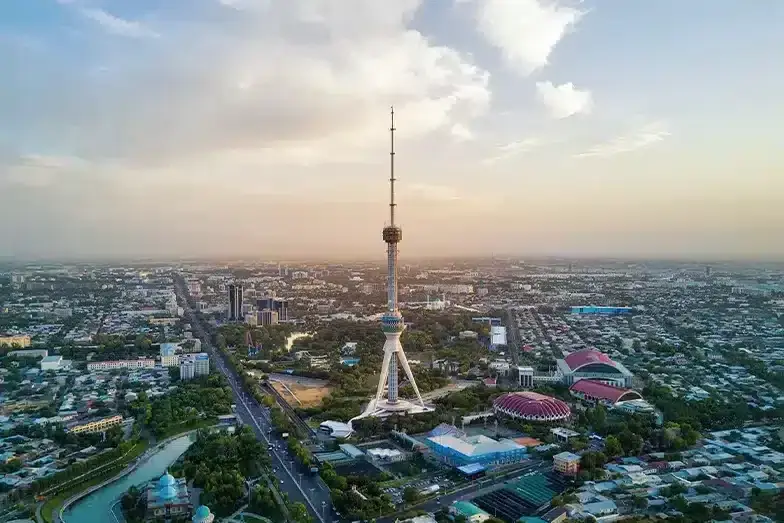
Most first journeys follow one line across the map, from Tashkent to Samarkand, Bukhara and Khiva, with the Kyzylkum desert in between. High-speed trains make the eastern half easy; the west, where our office is, rewards slower travel. A week covers the essentials. Ten to fourteen days lets you add the Fergana Valley, the desert fortresses of ancient Khorezm, the mountains or a neighbouring country.
- Capital
- Tashkent
- Currency
- Uzbek som (UZS)
- Languages
- Uzbek; Russian is widely understood
- Time zone
- GMT+5
- Ideal length
- 7–14 days
- Best months
- April–May, September–October
- Entry
- Visa-free for many nationalities; e-visa for others
- Gateways
- Tashkent, Samarkand and Urgench airports
Why visit Uzbekistan
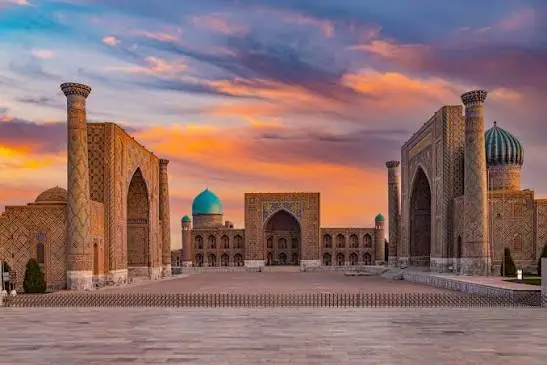
Three great Silk Road cities
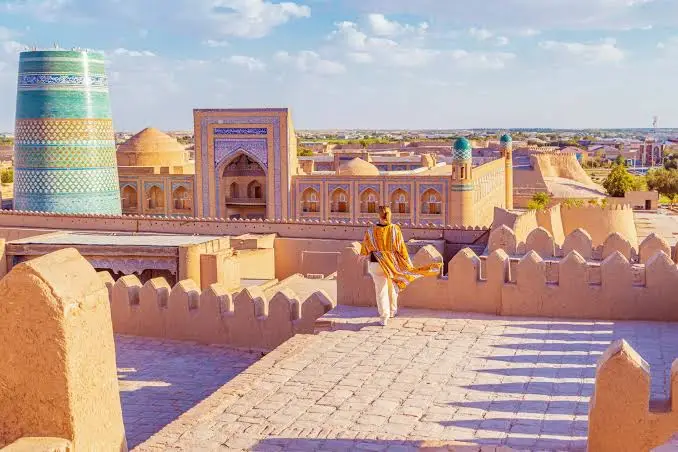
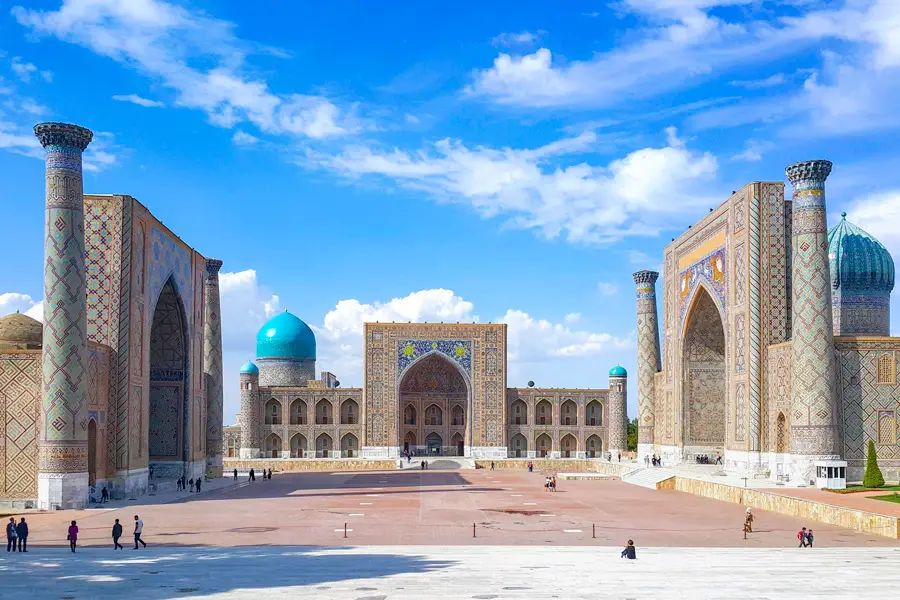
Samarkand's Registan, Bukhara's living old town and Khiva's walled Ichan-Kala, each a day apart.
Easy to travel
Visa-free entry for many nationalities, fast trains between the main cities, and a strong food and guesthouse culture.
Crafts that are still practised
Silk ikat in Margilan, ceramics in Rishtan and Gijduvan, paper-making in Samarkand, suzani embroidery in Bukhara.
Desert and mountains too
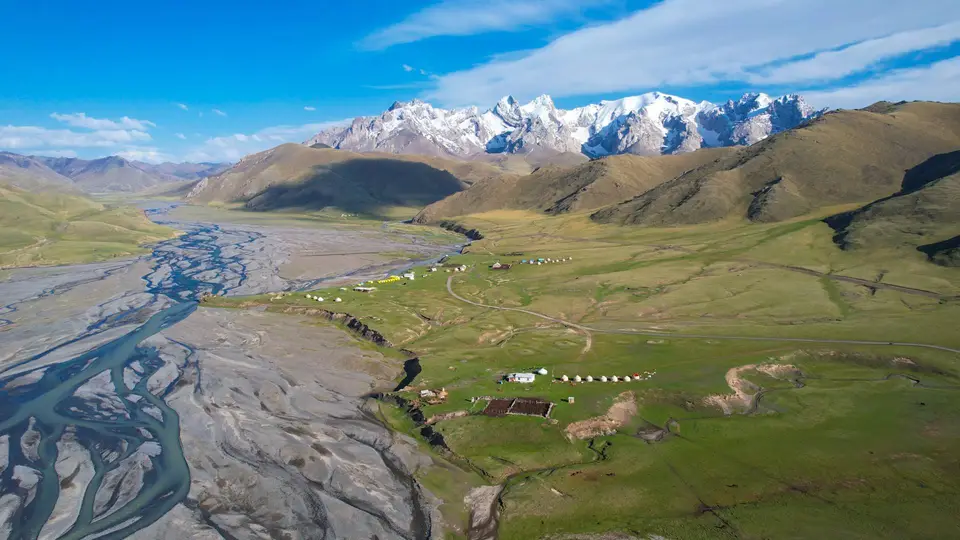
Yurt camps in the Kyzylkum, the clay fortresses of Khorezm, and walking country in the Chimgan and Nuratau hills.
Top destinations
Where to go in Uzbekistan
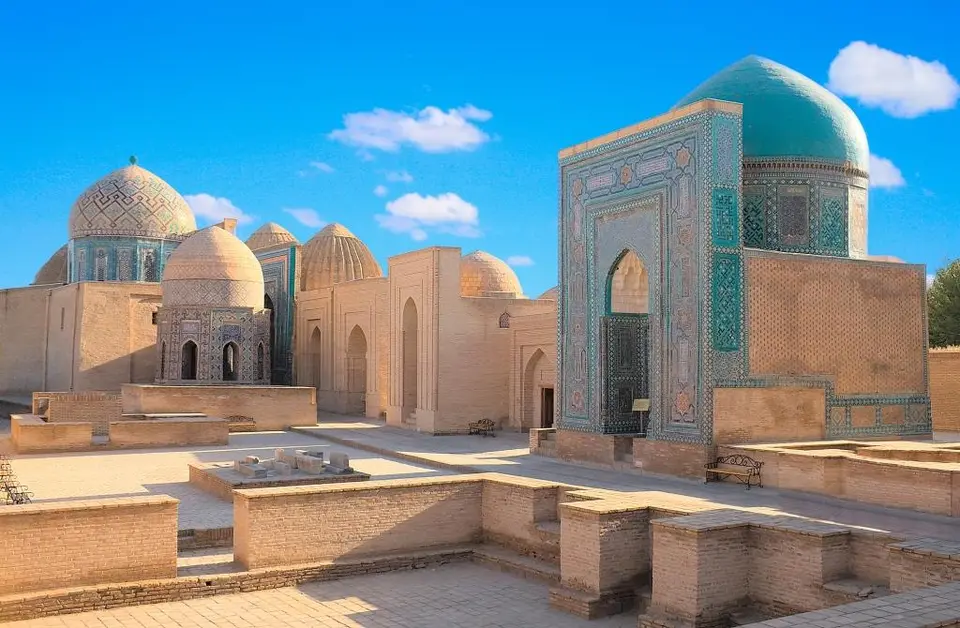
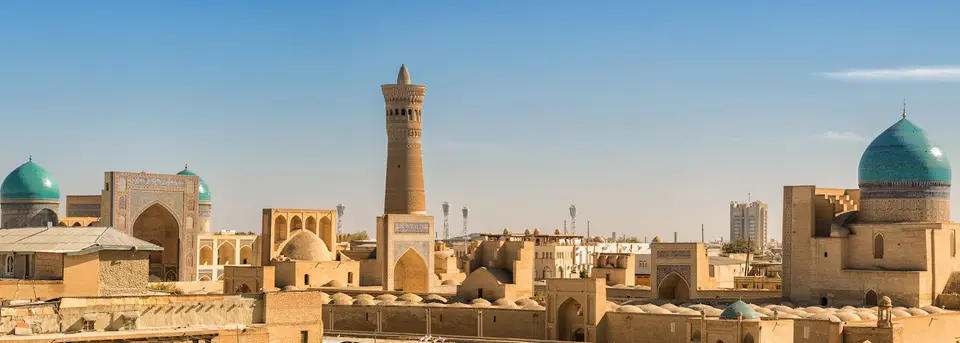










Tours
Uzbekistan tours & itineraries
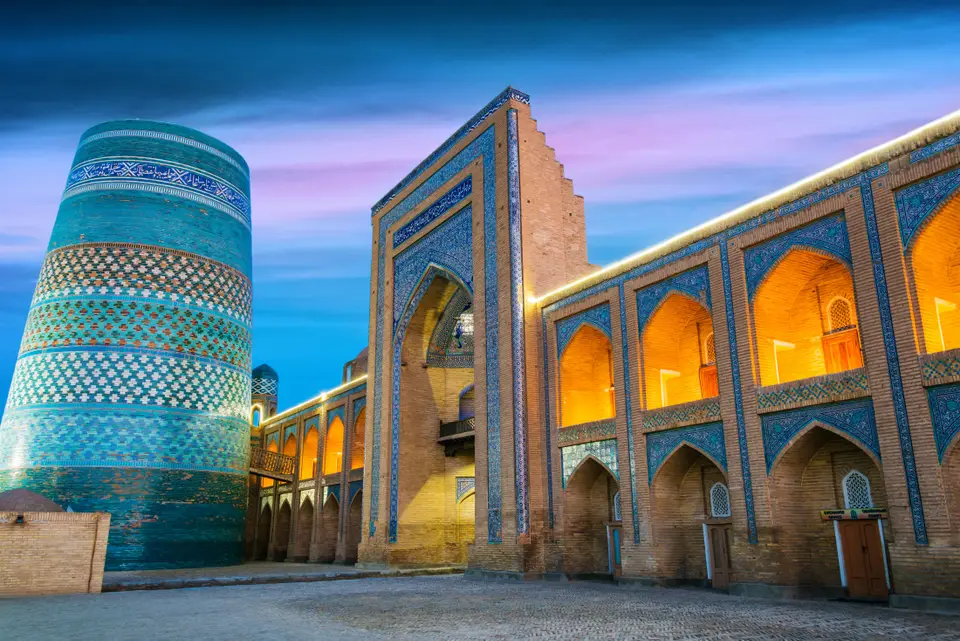
Uzbekistan essentials in 7 days
Tashkent → Khiva → Bukhara → Samarkand
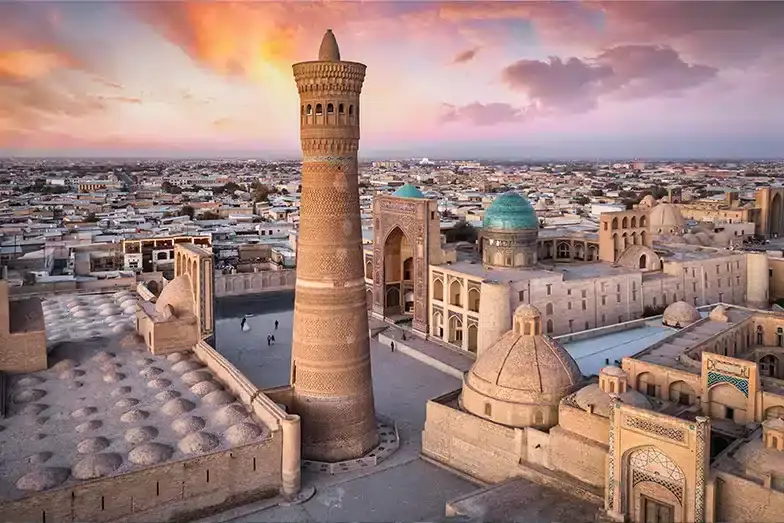
Uzbekistan in depth: 12 days
Tashkent → Kokand → Rishtan → Margilan → Khiva → Desert fortresses of Khorezm → Bukhara → Nurata & Lake Aydarkul → Samarkand → Shakhrisabz
Desert fortresses day tour from Khiva
Khiva → Desert fortresses of Khorezm
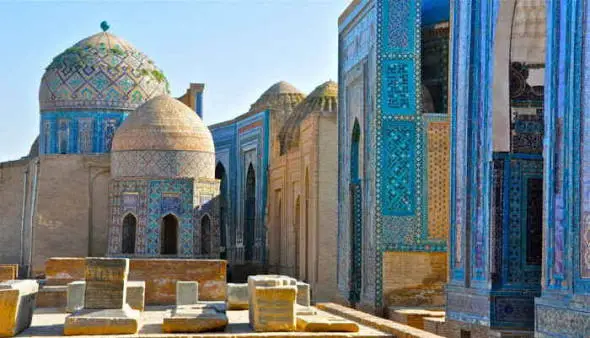

Aral Sea & Karakalpakstan from Khiva, 4 days
Khiva → Desert fortresses of Khorezm → Nukus → Muynak & the Aral Sea
Combine Uzbekistan with its neighbours
Desert Castles of Uzbekistan & the Seven Lakes of Tajikistan
Tashkent → Khiva → Desert fortresses of Khorezm → Bukhara → Samarkand → Seven Lakes (Haft Kul) → Shakhrisabz

Central Asia grand tour: five countries in 21 days
Ashgabat → Darvaza gas crater → Kunya-Urgench → Khiva → Bukhara → Samarkand → Seven Lakes (Haft Kul) → Tashkent → Margilan → Osh → Bishkek → Song-Kul → Issyk-Kul → Almaty
Uzbekistan & Kyrgyzstan: cities and mountains, 14 days
Tashkent → Khiva → Bukhara → Samarkand → Bishkek → Issyk-Kul → Karakol → Song-Kul
Things to do
Experiences in Uzbekistan


Season
When to visit Uzbekistan
Best months: April–May, September–October.
October: Ideal
Clear skies and comfortable temperatures. Excellent for the desert fortresses.
Plan a trip for this monthIdeal Good Challenging
Culture
Uzbek hospitality is real and immediate: tea appears before conversation, and bread (non) is treated with respect. Daily life is shaped by the mahalla, the neighbourhood community, and by family celebrations; in autumn you may well see a wedding procession in the old town.
Islam is practised in a relaxed way. Cover shoulders and knees at mosques and mausoleums, and ask before photographing people. Most will say yes.
History
For two thousand years the oases between the Amu Darya and Syr Darya rivers sat at the crossroads of the Silk Road. Sogdian merchants traded between China and Persia; Alexander the Great passed through; the Samanids made Bukhara a centre of learning; Genghis Khan destroyed much of it in the 13th century.
The country's most famous monuments date from the Timurid era (14th–15th centuries), when Amir Timur made Samarkand his capital, and from the khanates of Bukhara, Khiva and Kokand that followed. The Russian Empire absorbed the region in the 19th century, and Uzbekistan became independent in 1991.
Nature
Most of the country is desert and steppe: the Kyzylkum ("red sand") between Bukhara and Khiva, and the Ustyurt plateau beyond the shrinking Aral Sea. In the east, the Western Tien Shan rises above Tashkent, with walking and skiing at Chimgan and the Charvak reservoir, and the Fergana Valley sits in a green bowl ringed by mountains.
Food
What to eat in Uzbekistan
Plov (osh)
Rice cooked with carrots, onions and meat in a huge cauldron. Every region claims the best version.
Samsa
Flaky pastries baked against the wall of a clay tandoor oven.
Shivit oshi
Khiva's green dill noodles, served with a meat and vegetable stew.
Lagman
Hand-pulled noodles in a rich broth, a legacy of the Uyghur and Dungan kitchens.
Non
Round bread stamped with patterns; Samarkand's is famous across the country.
UNESCO World Heritage Sites in Uzbekistan
- 1990Itchan Kala
- 1993Historic Centre of Bukhara
- 2000Historic Centre of Shakhrisabz
- 2001Samarkand – Crossroad of Cultures
- 2016Western Tien-Shan (shared with Kazakhstan and Kyrgyzstan)
- 2023Silk Roads – Zarafshan-Karakum Corridor (shared with Tajikistan and Turkmenistan)
- 2023Cold Winter Deserts of Turan (shared with Kazakhstan and Turkmenistan)
Visas
Citizens of many countries, including the UK, most of the EU and the USA, can visit Uzbekistan without a visa for up to 30 days. Others can apply online for an e-visa. Rules change, so always check the official portal e-visa.gov.uz before booking flights.
Foreign visitors must be registered where they stay. Hotels do this automatically; keep the slips they give you.
Getting around
Trains are the best way between Tashkent, Samarkand and Bukhara: the high-speed Afrosiyob takes roughly two hours from Tashkent to Samarkand. Seats sell out in spring and autumn, so book early. Rail also reaches Khiva, Urgench, Nukus and the Fergana Valley.
Domestic flights link Tashkent with Urgench (for Khiva), Nukus, Termez and Bukhara. By road, the Khiva–Bukhara desert crossing is about 450 km, a long but memorable day.
Travel tips
- Carry some cash in som. Cards work in hotels and larger restaurants in the big cities, but bazaars, taxis and Khiva's small cafés expect cash.
- Book high-speed train seats as early as possible for April–May and September–October.
- Many museums and monuments charge a small photography fee.
- Friday midday prayers mean some active mosques close to visitors for a few hours.
Travel guide
Planning a trip to Uzbekistan
Uzbekistan: frequently asked questions
How many days do I need in Uzbekistan?
Seven to eight days covers Tashkent, Samarkand, Bukhara and Khiva at a comfortable pace. Ten to fourteen days lets you add the Fergana Valley, the desert fortresses of Khorezm or the mountains.
Is Uzbekistan safe for tourists?
Uzbekistan is generally considered a safe and welcoming country to visit, with low levels of crime against visitors. Check your government's travel advice before you go, as for any trip.
When is the best time to visit Uzbekistan?
April–May and September–October. Summer is very hot in Bukhara and Khiva; winter is cold but quiet and atmospheric.
Can I combine Uzbekistan with other countries?
Yes. Uzbekistan borders all four other Central Asian republics. The most popular combinations are with Kyrgyzstan, Tajikistan's Fann Mountains and Kazakhstan; Turkmenistan's Kunya-Urgench and Darvaza are a short drive from Khiva.
Plan your journey in Uzbekistan
Answer a few questions and a planner in Khiva will send a day-by-day route and a price. Free, with no obligation.