Culture & etiquette
Uzbek phrases for travellers: a pocket phrasebook
Fifty useful Uzbek words and phrases with an easy pronunciation guide and the Russian alternative, from greetings to the bazaar.
Uzbek is the main language of Uzbekistan, written in the Latin alphabet, and Russian is widely understood in cities. Five words take you a long way: Assalomu alaykum (hello), rahmat (thank you), iltimos (please), qancha? (how much?) and mazali! (delicious). People are delighted when visitors try, even with mistakes.
How to pronounce Uzbek
Uzbek is written as it sounds, and the stress usually falls on the last syllable. In the guides below, the stressed syllable is in capitals. A few letters work differently from English:
| Letter | Sounds like | Example |
|---|---|---|
| o | the o in British "hot", close to "aw" | non (bread): nawn |
| oʻ | the o in "more" | yoʻq (no): yohk |
| q | a k from deep in the throat | qancha (how much) |
| x | the ch in Scottish "loch" | xayr (goodbye) |
| gʻ | a soft, French-style r | toʻgʻri (straight) |
| j | the j in "jam" | joy (place) |
You will also see Uzbek in the Cyrillic alphabet on older signs and menus, and many people over forty learned it that way.
Greetings and introductions
| English | Uzbek | Say it like | Russian |
|---|---|---|---|
| Hello (respectful) | Assalomu alaykum | ah-sah-LAW-moo ah-lay-KOOM | Zdravstvuyte |
| Reply to hello | Va alaykum assalom | vah ah-lay-KOOM ah-sah-LAWM | Zdravstvuyte |
| Hi (to friends) | Salom | sah-LAWM | Privet |
| How are you? | Qalaysiz? | kah-lay-SEEZ | Kak dela? |
| Fine, thank you | Yaxshi, rahmat | yakh-SHEE, rah-MAHT | Khorosho, spasibo |
| What is your name? | Ismingiz nima? | ees-meen-GEEZ nee-MAH | Kak vas zovut? |
| My name is … | Mening ismim … | meh-NEENG ees-MEEM | Menya zovut … |
| Nice to meet you | Tanishganimdan xursandman | tah-neesh-gah-neem-DAHN khoor-sahnd-MAHN | Ochen priyatno |
| Goodbye | Xayr | khayr | Do svidaniya |
A hand placed on the heart with a slight nod is the polite greeting that goes with all of these. See our guide to local etiquette.
Courtesy and everyday words
| English | Uzbek | Say it like | Russian |
|---|---|---|---|
| Thank you | Rahmat | rah-MAHT | Spasibo |
| Thank you very much | Katta rahmat | kaht-TAH rah-MAHT | Bolshoye spasibo |
| Please | Iltimos | eel-tee-MAWS | Pozhaluysta |
| Yes / No | Ha / Yoʻq | hah / yohk | Da / Net |
| Excuse me, sorry | Kechirasiz | keh-chee-rah-SEEZ | Izvinite |
| I don’t understand | Tushunmadim | too-shoon-mah-DEEM | Ne ponimayu |
| Do you speak English? | Inglizcha gapirasizmi? | een-gleez-CHAH gah-pee-rah-SEEZ-mee | Vy govorite po-angliyski? |
| May I take a photo? | Rasmga olsam boʻladimi? | rahsm-GAH awl-SAHM boh-lah-DEE-mee | Mozhno sfotografirovat? |
| Very beautiful! | Juda chiroyli! | joo-DAH chee-roy-LEE | Ochen krasivo! |
At the bazaar
| English | Uzbek | Say it like | Russian |
|---|---|---|---|
| How much is it? | Bu qancha? | boo kahn-CHAH | Skolko stoit? |
| Expensive! | Qimmat! | keem-MAHT | Dorogo! |
| A little cheaper? | Arzonroq qiling | ahr-zawn-ROHK kee-LEENG | Mozhno deshevle? |
| I’ll take it | Olaman | aw-lah-MAHN | Beru |
| No, thank you | Kerak emas, rahmat | keh-RAHK eh-MAHS, rah-MAHT | Ne nado, spasibo |
| Just looking | Shunchaki qarayapman | shoon-chah-KEE kah-rah-yahp-MAHN | Prosto smotryu |
Bargaining is expected at bazaars and craft stalls, never in shops with printed prices. Smile, name a price, and meet in the middle. Prices are in soʻm and usually quoted in thousands: ellik ming is 50,000 soʻm.
Food and tea
| English | Uzbek | Say it like | Russian |
|---|---|---|---|
| Delicious! | Mazali! | mah-zah-LEE | Vkusno! |
| Enjoy your meal | Yoqimli ishtaha | yaw-keem-LEE eesh-tah-HAH | Priyatnogo appetita |
| Water | Suv | soov | Voda |
| Green tea / black tea | Koʻk choy / qora choy | kohk choy / kaw-RAH choy | Zelyony chay / chorny chay |
| Bread | Non | nawn | Khleb |
| Without meat | Goʻshtsiz | gohsht-SEEZ | Bez myasa |
| I don’t eat meat | Men goʻsht yemayman | men gohsht yeh-MAY-mahn | Ya ne yem myaso |
| Not spicy, please | Achchiq boʻlmasin | ahch-CHEEK bohl-mah-SEEN | Ne ostroye, pozhaluysta |
| The bill, please | Hisobni olib keling | hee-sawb-NEE aw-LEEB keh-LEENG | Schyot, pozhaluysta |
Tea comes before, during and after every meal. If your host pours only a little into your cup, it is a kindness, not stinginess: it means they will keep refilling it. More in our guide to Central Asian food.
Getting around
| English | Uzbek | Say it like | Russian |
|---|---|---|---|
| Where is …? | … qayerda? | kah-yer-DAH | Gde …? |
| Toilet | Hojatxona | haw-jaht-khaw-NAH | Tualet |
| Hotel | Mehmonxona | meh-mawn-khaw-NAH | Gostinitsa |
| Train station | Vokzal | vok-ZAHL | Vokzal |
| Airport | Aeroport | ah-eh-raw-PORT | Aeroport |
| Left / right | Chapga / oʻngga | chahp-GAH / ohng-GAH | Nalevo / napravo |
| Straight on | Toʻgʻriga | tohgh-ree-GAH | Pryamo |
| Stop here, please | Shu yerda toʻxtang | shoo yer-DAH tohkh-TAHNG | Ostanovite zdes |
Numbers
| Number | Uzbek | Say it like |
|---|---|---|
| 1 | bir | beer |
| 2 | ikki | eek-KEE |
| 3 | uch | ooch |
| 4 | toʻrt | tohrt |
| 5 | besh | besh |
| 6 | olti | awl-TEE |
| 7 | yetti | yet-TEE |
| 8 | sakkiz | sahk-KEEZ |
| 9 | toʻqqiz | tohk-KEEZ |
| 10 | oʻn | ohn |
| 20 | yigirma | yee-geer-MAH |
| 50 | ellik | el-LEEK |
| 100 | yuz | yooz |
| 1,000 | ming | meeng |
Numbers combine simply: 25 is yigirma besh, 150,000 is yuz ellik ming.
If you need help
| English | Uzbek | Say it like | Russian |
|---|---|---|---|
| Help! | Yordam bering! | yawr-DAHM beh-REENG | Pomogite! |
| I need a doctor | Menga shifokor kerak | men-GAH shee-faw-KAWR keh-RAHK | Mne nuzhen vrach |
| Pharmacy | Dorixona | daw-ree-khaw-NAH | Apteka |
| Police | Politsiya | paw-LEE-tsee-yah | Politsiya |
| I am lost | Adashib qoldim | ah-dah-SHEEB kawl-DEEM | Ya zabludilsya |
The emergency numbers in Uzbekistan are 101 (fire), 102 (police) and 103 (ambulance). If you travel with us, your guide and our Khiva office are a phone call away at any hour of your trip.
In the other four countries
Assalomu alaykum and its local forms work everywhere in Central Asia, and Russian is understood in the cities of all five countries. "Thank you" changes from border to border:
| Country | Thank you | Hello |
|---|---|---|
| Uzbekistan | Rahmat | Assalomu alaykum |
| Kazakhstan | Rakhmet | Sälemetsiz be |
| Kyrgyzstan | Rakhmat | Salamatsyzby |
| Tajikistan | Rahmat / Tashakkur | Assalomu alaykum |
| Turkmenistan | Sag boluň | Salam |
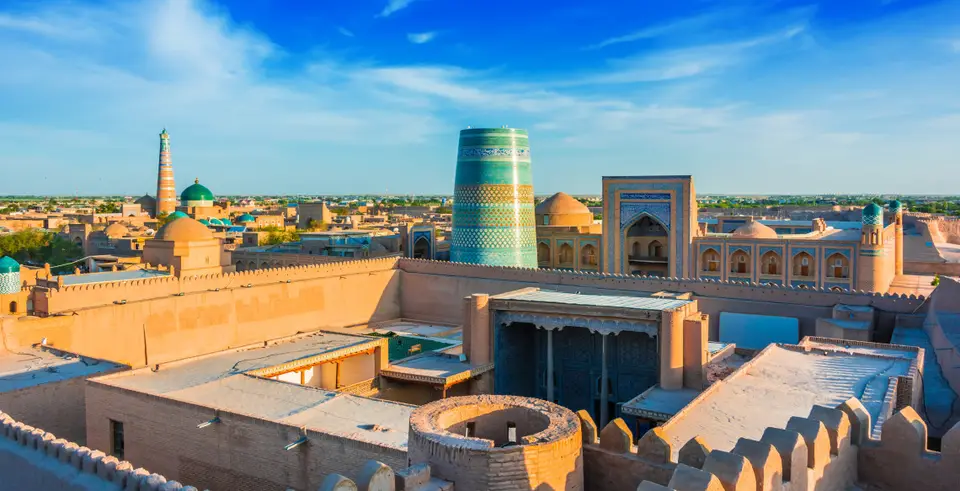
In Khiva and the rest of Khorezm, people speak a dialect of their own, closer to Turkmen than the Uzbek of Tashkent. Standard Uzbek is understood everywhere, and a Khorezm rahmat earns an even bigger smile.
Frequently asked questions
Do people in Uzbekistan speak English?
In hotels, at the main sights and among young people in Tashkent, Samarkand and Bukhara, often yes. Elsewhere, much less. A few words of Uzbek or Russian and a translation app go a long way; your guide translates everything else.
Should I learn Uzbek or Russian?
For a short trip, learn a handful of Uzbek courtesies (they open doors and hearts) and rely on Russian, a translation app or your guide for anything practical. Russian is more useful if you are also visiting Kazakhstan and Kyrgyzstan.
Is Uzbek written in Latin or Cyrillic?
Officially in the Latin alphabet, which is what you see on most new signs. The Cyrillic alphabet is still common on older signs, in some menus and among older people.
Rules, timetables and prices change. We check this page regularly, but always confirm entry requirements with official sources before you travel.