Khiva · Food
Khiva food: what to eat in Khiva
The dishes that make Khorezm cooking different from the rest of Uzbekistan, and how to find them in Khiva.
Khiva’s signature dish is shivit oshi: bright green noodles made with dill, served with a meat and vegetable stew and yogurt. Also try tukhum barak (egg-filled dumplings), gumma (fried meat pies) and Khorezm-style plov. In late summer and autumn, Khorezm melons are famous across Uzbekistan.
Why Khorezm food is different
Khorezm is an oasis cut off from the rest of Uzbekistan by the Kyzylkum desert, and its cooking developed on its own path. You will find more dishes built on dough, eggs and dairy, generous use of fresh herbs, especially dill, and a local plov tradition. Many Uzbek travellers from Tashkent come to Khiva partly for the food.
Dishes to try
Shivit oshi
The dish of Khiva. Noodles are coloured and flavoured with finely chopped dill (shivit), then topped with a stew of meat, potato and vegetables and a spoonful of yogurt. Fresh, herby and filling. Most restaurants in and around Ichan-Kala serve it.
Tukhum barak
Delicate boiled dumplings filled with egg (tukhum) whisked with milk, served with butter or sour cream. It is a little tricky to make, which is why it is a dish to look for in Khorezm specifically.
Gumma
Fried pies filled with minced meat, sold hot at bazaars and street stalls in the morning. Eat them with tea.
Khorezm plov
Plov is cooked all over Uzbekistan, and every region claims its version is the best. In Khorezm, look for plov made with yellow carrots. Plov is usually a lunch dish; the best pots are often finished by early afternoon.
Bread, samsa and tandir dishes
Flat round bread (non) baked in a clay tandir oven, and samsa, meat-filled pastries baked on the oven wall. Look for the tandir bakeries in the lanes of Dishan-Kala.
Melons and fruit
Khorezm melons have a reputation across Central Asia. The season peaks from late July to October, when stalls on the roadside and in the bazaar are piled high. Grapes, pomegranates and apricots (fresh in early summer, dried all year) are also excellent.
Tea
Green tea is the default, poured in small bowls (piala). Black tea is also common. Tea comes with almost every meal and every visit.
Where to eat
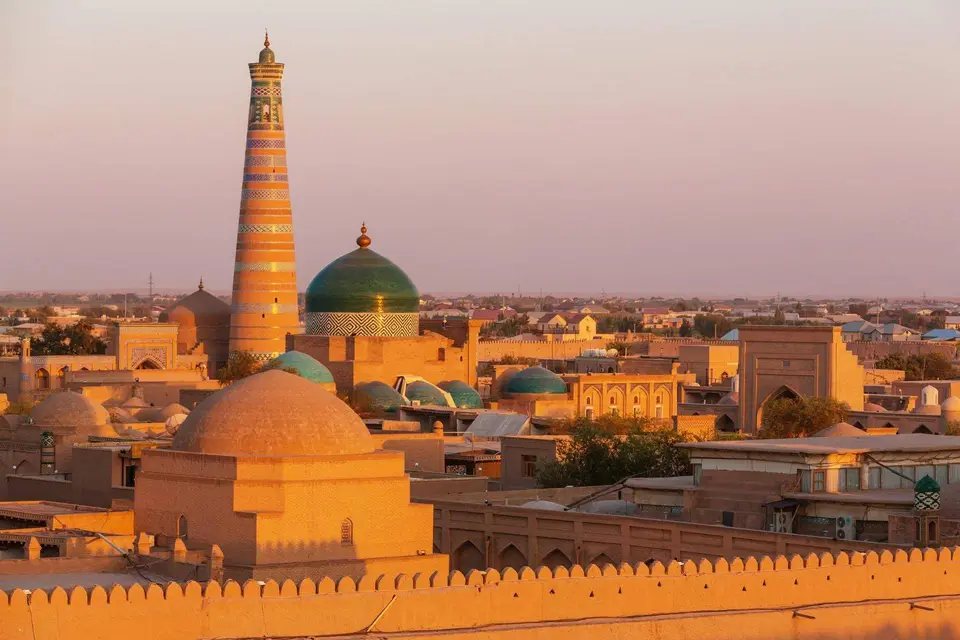
- Inside Ichan-Kala, cafés and restaurants line the main street between the west and east gates. Several have rooftop terraces facing Kalta Minor or the walls, which are lovely at sunset.
- Outside the walls, prices are lower and the clientele more local, especially near the bazaar by the east gate.
- Eating with a family is the best food experience in Khiva. We can arrange a home-cooked meal or a cooking session where you make shivit oshi yourself; see the shivit oshi cooking class if it is open for booking.
Restaurant names change often, so we recommend places to our travellers directly rather than printing a list that may go out of date.
Practical tips
- Water: drink bottled or filtered water. Most guesthouses provide it.
- Vegetarians: shivit oshi without the meat stew, tukhum barak, salads, bread, dairy and fruit make Khiva easier than many places. Say go‘shtsiz ("without meat").
- Alcohol is available in many restaurants, but not at religious sites or in some family-run places.
- Ramadan: restaurants for visitors stay open, but eat discreetly in residential lanes during the day.
Frequently asked questions
What is the most famous food in Khiva?
Shivit oshi, green noodles flavoured with dill and served with a meat and vegetable stew and yogurt. It is the signature dish of Khiva and the Khorezm region.
Is Khiva good for vegetarians?
Better than many places in Central Asia. Shivit oshi can be served without meat, and tukhum barak (egg dumplings), salads, bread, yogurt and fruit are easy to find. Ask for "go‘shtsiz", without meat.
When is melon season in Khorezm?
From late July to October, with the best and most varied melons in August and September.
Rules, timetables and prices change. We check this page regularly, but always confirm entry requirements with official sources before you travel.